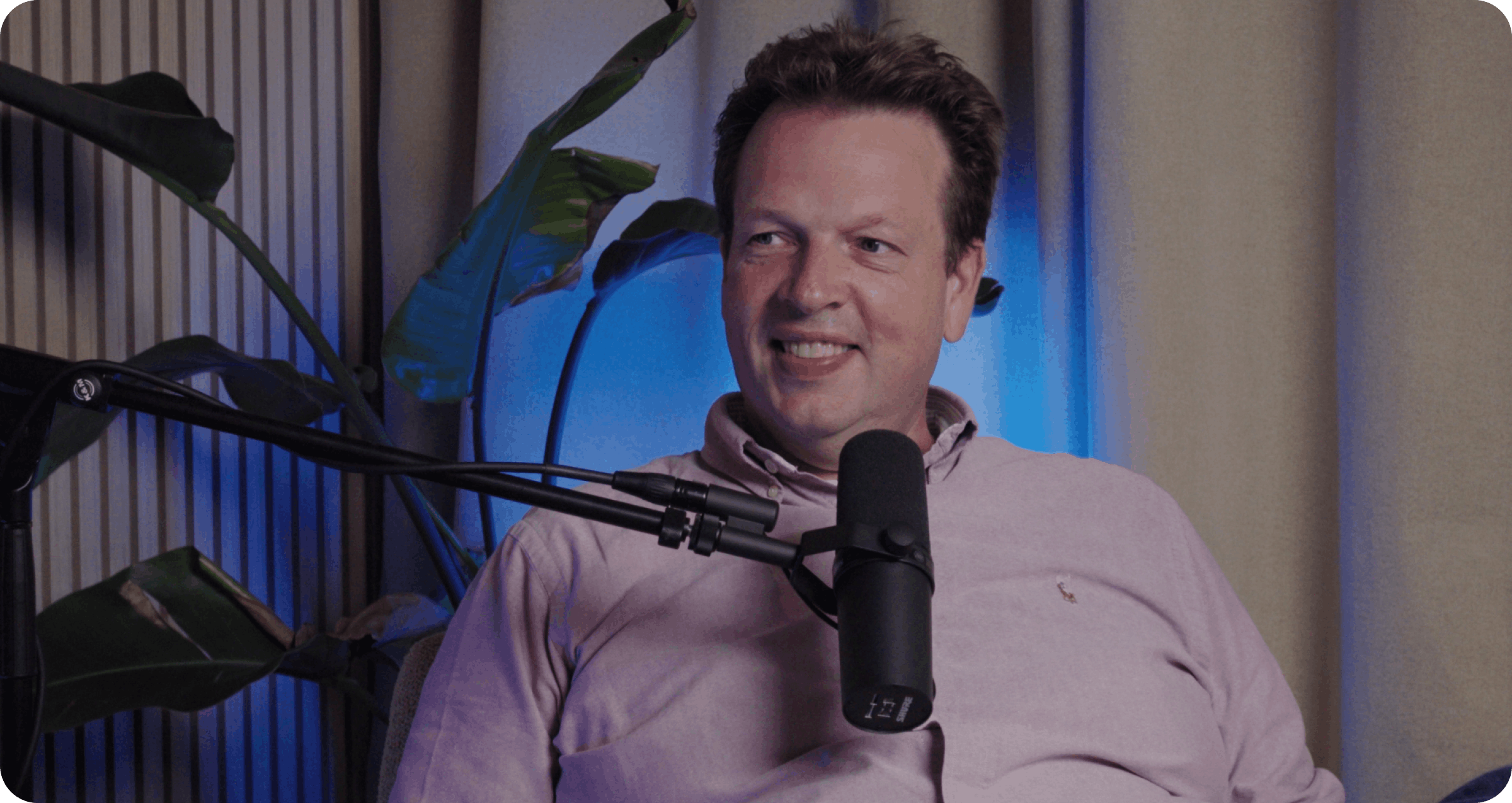
According to Geert-Jan Waasdorp of Intelligence Group, recruitment is one of the cheapest ways to prevent sickness absence. For every euro an employer spends on recruitment, it spends five on letting people go, twenty on flexible labour and fifty on sickness absence. Yet almost everyone names quality of hire as their most important recruitment KPI, while fewer than a third actually measure it.
Geert-Jan Waasdorp has worked with labour market data since 1999. At the heart of his businesses is Intelligence Group, which turns 25 next year and supplies labour market data to employers, recruitment teams and agencies across Europe. Its sister initiatives include the Academie voor Arbeidsmarktcommunicatie and Arbeidsmarktkansen. In this episode of Selection Talks, he tells Stefan van Duin why recruitment is the gatekeeper against sickness absence, where the labour shortage is most acute and why recruiters should have lunch with their target audience more often.
Q: What does Intelligence Group do?
A: Geert-Jan Waasdorp prefers to keep it simple. Intelligence Group provides information and data to companies and recruitment teams looking for people, and to people looking for a job. It does not act as a recruitment agency itself. The aim is to help employers anywhere in Europe hire the best people. Waasdorp has worked with labour market data since 1999, and Intelligence Group turns 25 next year. Around it sit initiatives such as the Academie voor Arbeidsmarktcommunicatie (Academy for Labour Market Communication), a recruiter network and Arbeidsmarktkansen.
Q: How does labour market data help flexible workers get a mortgage?
A: Through Arbeidsmarktkansen, which Waasdorp calls one of the best things that hardly anyone knows about. Flexible workers often cannot show permanent payslips. An analysis of their labour market value and prospects gives them a report they can take to a mortgage lender. According to Waasdorp, all banks use it. To get there, the product had to pass the regulators and the compliance department of every bank. That process was completed ten years ago.
Q: What makes a company successful according to Geert-Jan Waasdorp?
A: People enjoying coming to work there and customers being happy. Making money is nice, but he does not measure success by whether he could sell the company for top price one day. He likes ambition, doing new things, growing and challenging the market a little. When he had been an entrepreneur for fifteen years, he wrote down fifteen highlights. All of them had to do with things he did together with colleagues, never with big deals or profit. The low points, he says, are always on the people side too, almost never on the product side.
Q: What has Geert-Jan Waasdorp learned as an entrepreneur?
A: To count to ten, he says, and he can do that now. Fifteen years ago, people asked whether you worked part-time if you went home at half past seven. Now the office is empty by around six. Intelligence Group is not a billable-hours business but has recurring revenue, so with good planning you get a lot done in a working week. He also panics less quickly. Where twenty years ago he needed four days to get over a setback, he now recovers within four hours. A competitor you can really go toe to toe with brings out the best in you and your team, he says, while making revenue too easily makes you lazy. And where he used to send people home for turning up without a jacket, there is now a dog walking around the office.
Q: Which labour market trends does Geert-Jan Waasdorp see in the Netherlands?
A: AI, sickness absence and young people. Intelligence Group had been seeing absence in the data for two years, and it is only now being picked up. He is worried about young people. According to him, 62,500 young people should be in school but are not, and are not being home-schooled either. Many refugees with a residence permit, people we badly need, are also standing on the sidelines. On top of that, the working population will keep growing until 2030 but not after that, while the over-65 group keeps increasing. There are now three workers for every person over 65, and that is heading towards two to one. Geopolitics plays a role as well, from a possible peace in Ukraine to the expansion of the Dutch armed forces.
Q: How can recruitment help reduce sickness absence?
A: By making sure the right person ends up in the right place, with the right expectations. Waasdorp adds that he is not an absence specialist and that good recruitment will not take absence from 10 percent to zero. But quality of hire is, in his view, one of the strongest tools there is. Even so, recruitment conversations often revolve around cost and speed. Ask recruiters for their most important KPI and they all say quality of hire, yet fewer than a third measure it. Those who do measure it often look only at retention. In sessions with CHROs, the examples keep piling up of what recruitment, labour market communication and employer branding can do against absence, cheaply and effectively.
Q: What is the return on an extra euro spent on recruitment?
A: Waasdorp does the maths. For every euro you spend on recruitment, you spend five euros on parting ways with someone, twenty on flexible labour and fifty on sickness absence. Turn that one euro into two and the rest goes down. That is why he sees an assessment as a hygiene factor for quality of hire. A few extra euros at the front end can save ten to twenty euros in absence or turnover. Yet organisations find that investment hard because they want to see the proof first. When hiring is a problem, the floodgates open. Once the urgency is gone, recruitment becomes a cost item again.
Q: Which question predicts whether a new hire will stay?
A: Within the first month, go to the new employee and ask whether they are enjoying it and whether the employer has delivered on what it promised. Ask the hiring manager whether this is the hire they hoped to make. If either of them has doubts, Waasdorp sees that as the most important signal of turnover, with lost productivity and a risk of absence. Then hold on to that person, or look at where they can move internally. If things often go wrong with the same hiring manager, you know there is room for improvement there. The reason this rarely happens, he says, is the rat race. Recruiters want to do it but lack the time, the resources and the training.
Q: Where is the biggest labour shortage in the Netherlands?
A: In everything that involves craftsmanship. By 2034, according to Waasdorp, the Netherlands will have more thinkers than doers. Of the people entering the labour market, only one in three is a doer, while two in three of those leaving are. That affects installation work, healthcare, construction, the armed forces, energy and water, and all the work on roads and bridges. There are plenty of people who can write policy papers about it, but not enough who can do the work. Although the shortage is lower on the agenda now than it was from 2021 to 2023, he expects employers to go all-in on hiring again within six to twelve months and the labour market to be back on boardroom agendas in 2027.
Q: How do you recruit skilled tradespeople who are not on LinkedIn?
A: Over the past ten to thirteen years, recruitment has mostly run through LinkedIn and Indeed, Waasdorp says, but how do you recruit a breakdown technician or a 55-year-old welder? For 24 years, Intelligence Group has surveyed 4,000 to 5,000 Dutch people aged 15 to 67 every quarter, different people each time, about what they value, what they read and where they can be found. Practically educated workers, as he prefers to call them because he finds 'low-skilled' a terrible word, are his biggest growth market. Still, he advises recruiters to talk to the target group themselves too. If you want to hire refuse collectors, ride along on five trucks for five days. He mentions recruitment manager Ronald van Driel, who mainly has lunch with hiring managers and with the people he recruits. And a large part of your target group is not online. You meet them at your competitor's gate.
Q: Why is a work sample test such a strong predictor of job performance?
A: Because on the shop floor you see whether someone can really do the job. You can test whether someone can add one and one, Waasdorp says, but can they also do it under pressure, or in a freezer at minus twenty degrees? He gives an example from Kevin Wheeler about working in a mine 800 metres underground. Most candidates think they can handle it, but only when they go down in the lift virtually wearing 3D glasses do you really know. Stefan van Duin calls that a work sample test, and combined with other tests the prediction becomes more reliable. Shadowing someone for a day also works well, although that is harder with 100,000 applicants a year than in an organisation of 30 people.
Q: Why are no-poach agreements between employers a problem?
A: Because they take career opportunities away from scarce talent. Waasdorp still sees it at conferences in healthcare and local government, where recruiting from each other is considered not done. Such gentlemen's agreements were already prohibited by the ACM, the Dutch competition authority, and according to him they have been a criminal offence for about six months. The result is that agencies and secondment firms have the field to themselves, and there are huge numbers of scarce nurses who have never been approached, even though they would have better opportunities elsewhere. He does not accept the argument that everyone falls under the same collective labour agreement. Every agreement has its workarounds, such as a signing bonus, a labour market allowance or a higher pay scale. Competition, he says, drives innovation and makes employers take better care of their people.
Q: Which markets does Intelligence Group provide labour market data for?
A: For all of Europe, the EU plus the United Kingdom. Every two years, Intelligence Group runs a quarter of a million surveys, more than ten thousand a month. For some clients the United States is added as a benchmark, but reliable candidate data per state would require around 150,000 more interviews, according to Waasdorp. The Netherlands and Belgium account for about 90 percent of the work, with the DACH region around that. Agencies are a major client group. Their market has been struggling for years, yet Intelligence Group has not lost a single agency client. They use the data to find talent, retain clients and generate leads, increasingly with agents that do the groundwork. Because between 20 and 25 percent of the working population in the Netherlands does not speak Dutch, he is considering an English-speaking group of recruitment leaders within RLN for 2027.
.png)