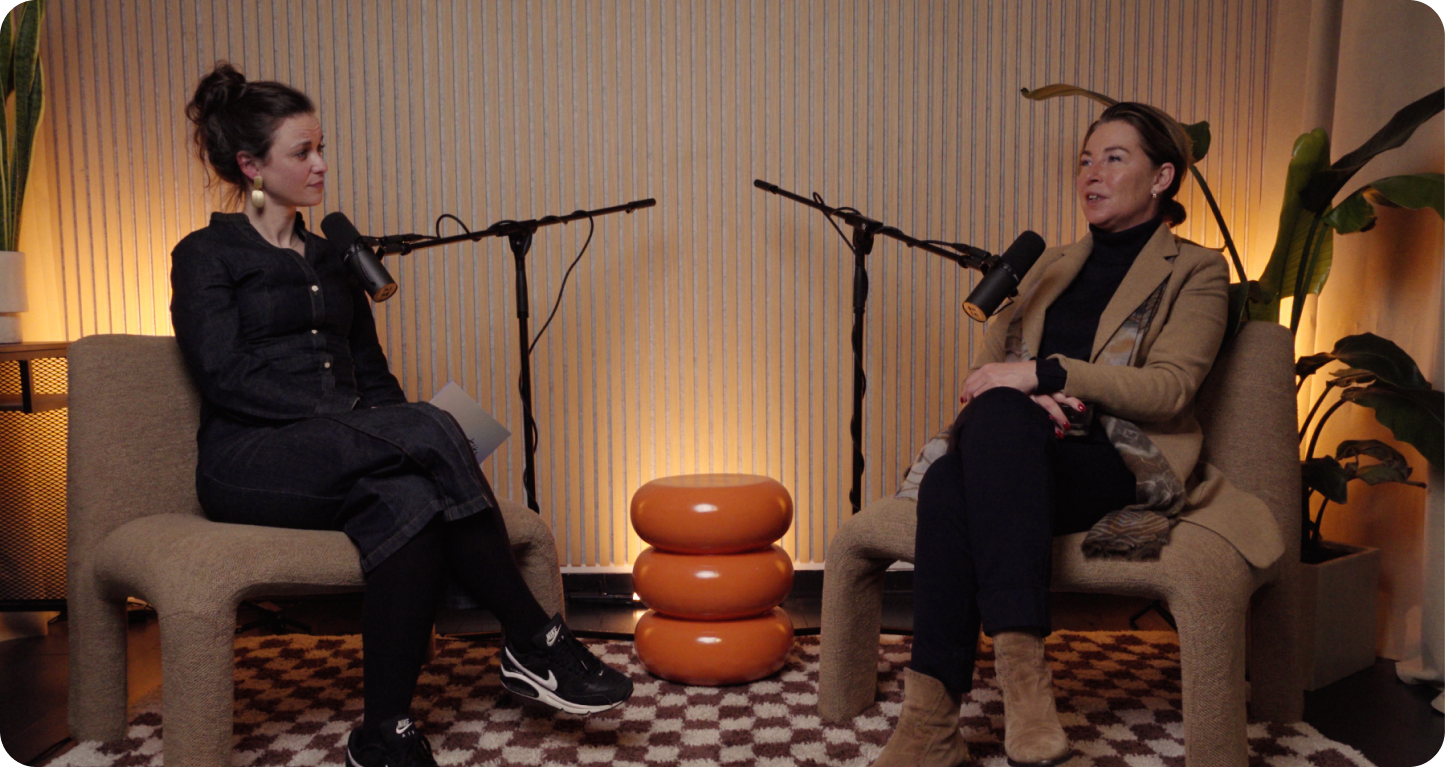
Heidi Scholtens has been active in the secondment sector for more than twenty years and has been working at Welten Groep for four years. She sold her own secondment company Bold to Welten precisely because Welten is a development company and she wanted to make the move towards genuine personal development for her people. She is a mother of five children and combines that with a leadership role in which vulnerability is a core value.
Q: What is the difference between secondment and staffing and why is that distinction so important according to Heidi Scholtens from Welten?
Secondment is for long-term projects where specialised personnel are deployed who are also substantively ready to hit the ground running. Staffing is for peaks: temporary deployment during peak demand. Heidi sees secondment companies increasingly being pushed towards the staffing model through legislation and collective agreement classifications, while the service is fundamentally different. Secondment companies invest in the training and development of their people. That investment is difficult to fund when margins come under pressure from regulation oriented more towards the staffing model.
Q: How does Heidi Scholtens from Welten deal with legislation around equal pay in secondment?
She accepts the direction but places critical notes on the practicality. Heidi supports the principle of equal or equivalent pay, but points out that secondment companies sometimes train people internally for two months before placing them. When margins then also come under pressure through collective agreement obligations derived from the staffing model, it becomes financially unsustainable. Her prediction: if this continues, secondment companies risk being forced to adopt the staffing agency model, which comes at the cost of being a good employer.
Q: Why is showing vulnerability as a leader a strength according to Heidi Scholtens from Welten?
Because it gives others the space to do the same. Heidi actively shares mistakes and uncertainties with her team, including apologies when she gets things wrong herself. Her observation: when the leader shows vulnerability, employees dare to do the same. That creates openness, more perspectives and ultimately better decisions. She draws the parallel with her children: by being vulnerable with them she learns and achieves the most. That works exactly the same way on the work floor.
Q: How does Heidi Scholtens from Welten view the role of AI in the secondment sector?
As an opportunity to make work more human, not as a threat. Heidi already uses AI herself for emails, scheduling, planning and research before client meetings. Her experience: the time it frees up she immediately fills with conversations and contact moments she previously did not have. AI takes over the work people did not enjoy anyway. What remains is specialisation and human contact. Her point: technology actually creates more warmth, because recruiters finally have time again for the conversations that drew them to the profession.
Q: What is the advice of Heidi Scholtens from Welten to smaller secondment companies considering joining a larger organisation?
Start with the question of whether you want it and whether you can handle it. Heidi sees the administrative burdens, ISO certifications and investments now falling on secondment companies becoming increasingly heavy. For smaller entrepreneurs the trade-off is real: do I carry this myself or do I find a partner? If the choice is for collaboration, find an organisation that is an addition to who you are, not a substitute. That nuance, addition versus substitution, is for her the most important criterion in any collaboration.
Q: How does Heidi Scholtens from Welten bring her employees along through all the changes now affecting the secondment sector?
By placing transparency and ownership at the centre. Heidi shares the challenges she sees with her team, including the things she does not have answers to herself. That creates dialogue and through that, ownership. Her conviction: people who feel they are allowed to think along will also stand up to move along. She combines that with the recognition that not everyone has the same entrepreneurial drive and that this is not necessary either. The machine needs to run, calm needs to be present. But openness needs to be there too.