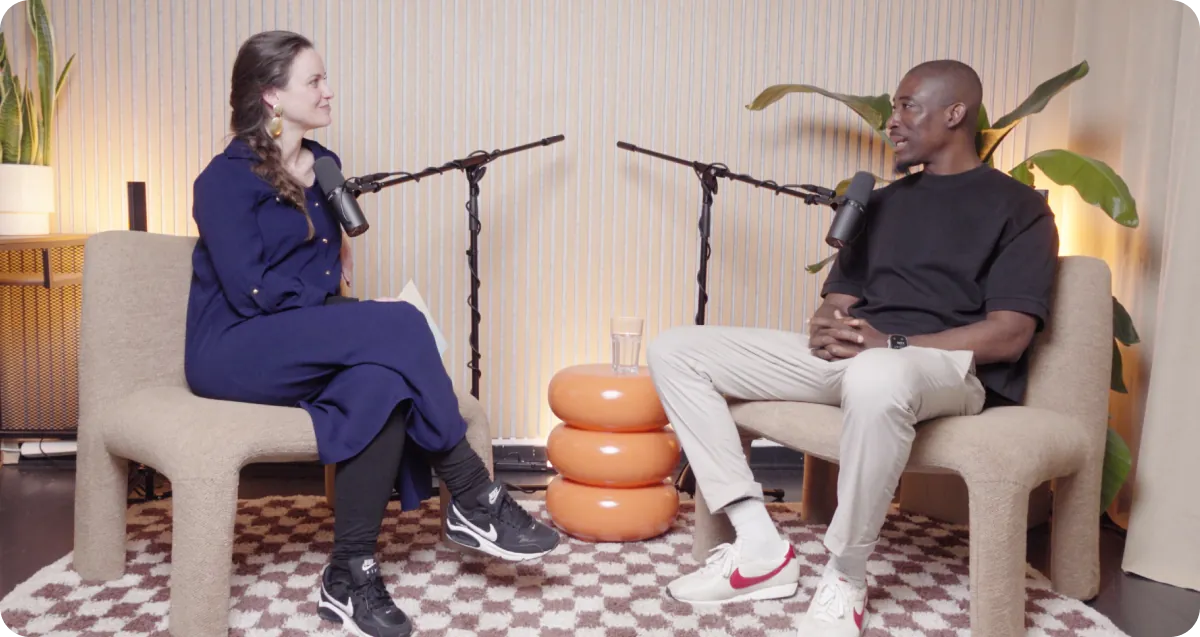
Kobi is Talent Acquisition Leader at Heineken, where he is responsible for the recruitment and selection activities of three entities: Heineken Group, Heineken Netherlands and Heineken Supply. Growing up in Ghana and emigrating to the Netherlands at the age of eleven, he started his career as an HR employee at Nike, where he worked for eight years and grew into international mobility and recruitment. Via leadership roles at several large international organisations and a senior position at Trafix, he ended up at Heineken.
Q: How has Kobi Ampoma from Heineken's sports career shaped his approach as an HR leader?
A: Sport gave Kobi something he sees directly reflected in his work: discipline, dedication and leadership. As captain in his sport, he was the extension of the coach and at the same time responsible for the group. That combination of individual and team is exactly what he sees in recruitment: you need talent, but what matters is what you achieve together.
Q: Why does Kobi Ampoma from Heineken always have multiple mentors alongside him?
A: Because you do not know what you do not see. Kobi met his first mentor at Nike, around twenty-five years ago, and the importance of mentorship has stayed with him ever since. To this day he has both a female and a male mentor who help him on different topics. His mentors often saw things in him that he could not see himself: that he was ready for a next step, even when he doubted it.
Q: How do you find a good mentor as a recruiter who wants to grow according to Kobi Ampoma from Heineken?
A: Start in your own network. Look for people who know you well but with whom you have never had a really in-depth conversation about what drives you or where you struggle. That could be people in the same organisation but not too close to your daily work, so they can also ask you critical questions. You do need a connection, because the conversations can be confidential in nature.
Q: How does Kobi Ampoma from Heineken keep his employer brand strong with a broad audience?
A: By recognising that candidates are also customers. Kobi points out that Heineken is a consumer brand and that a poor candidate experience can directly influence whether someone chooses Heineken in the supermarket or not. His team therefore continuously focuses on how candidates are rejected and what the overall experience with the organisation looks like. As he puts it: recruiters play an important role in whether a candidate stays a consumer or not.
Q: How does Kobi Ampoma from Heineken ensure candidates have a good experience, even when they are rejected?
A: By continuously making his team aware that candidates are also customers. Kobi works on an aligned way of working where every recruiter spends more time on the kick-off with the hiring manager: what are they really looking for, what does the labour market data say, and what is the value proposition for the candidate? That focus on candidate experience runs through the entire process, including the way people are rejected.
Q: How does Kobi from Heineken deal with the expectations of different generations in the workplace?
A: By providing context rather than making assumptions. Kobi gives his team a lot of flexibility, but also expects people to be present at moments that matter. If he sends an email at 9pm, he explicitly communicates that he does not expect a reply. His approach: make expectations a topic of conversation. When you provide context, people understand better and fewer unspoken assumptions build up on both sides.
Q: What does Kobi Ampoma from Heineken mean when he says decisions about your career are made when you are not in the room?
A: That perception plays a major role in what opportunities you get. If you do not know how others perceive you when you are not around, you cannot influence that perception either. Kobi regularly shares this insight with people he mentors and sees it as the responsibility of more senior people to pass it on to young talent, because it is not something people naturally feel or realise.
Q: How does Kobi Ampoma from Heineken prepare his team for the impact of AI on recruitment?
A: By making the topic a structural part of team meetings. Kobi introduced a rotating format where each team member takes turns bringing an article, topic, or LinkedIn post to the team meeting to trigger the group to think about what AI means for their work. He sees himself as more proactive than his team on this and wants to make that shift together.
Q: How does Kobi Ampoma from Heineken see the future of the recruiter in a world with increasing AI tooling?
A: AI takes over the pre-selection, but the human touch remains the differentiator. Kobi describes a scenario where a tool helps reduce 350 applicants to a longlist, after which the recruiter makes the decision. What remains is the real craft: asking the right questions, creating a good candidate experience, and seeing the person behind the application. Recruiters who are not actively exploring how AI works risk being left behind.