


In short
Of candidates who don't believe a cover letter gives an honest picture, 41% wrote none. Among those who do believe it, that share was 15%.
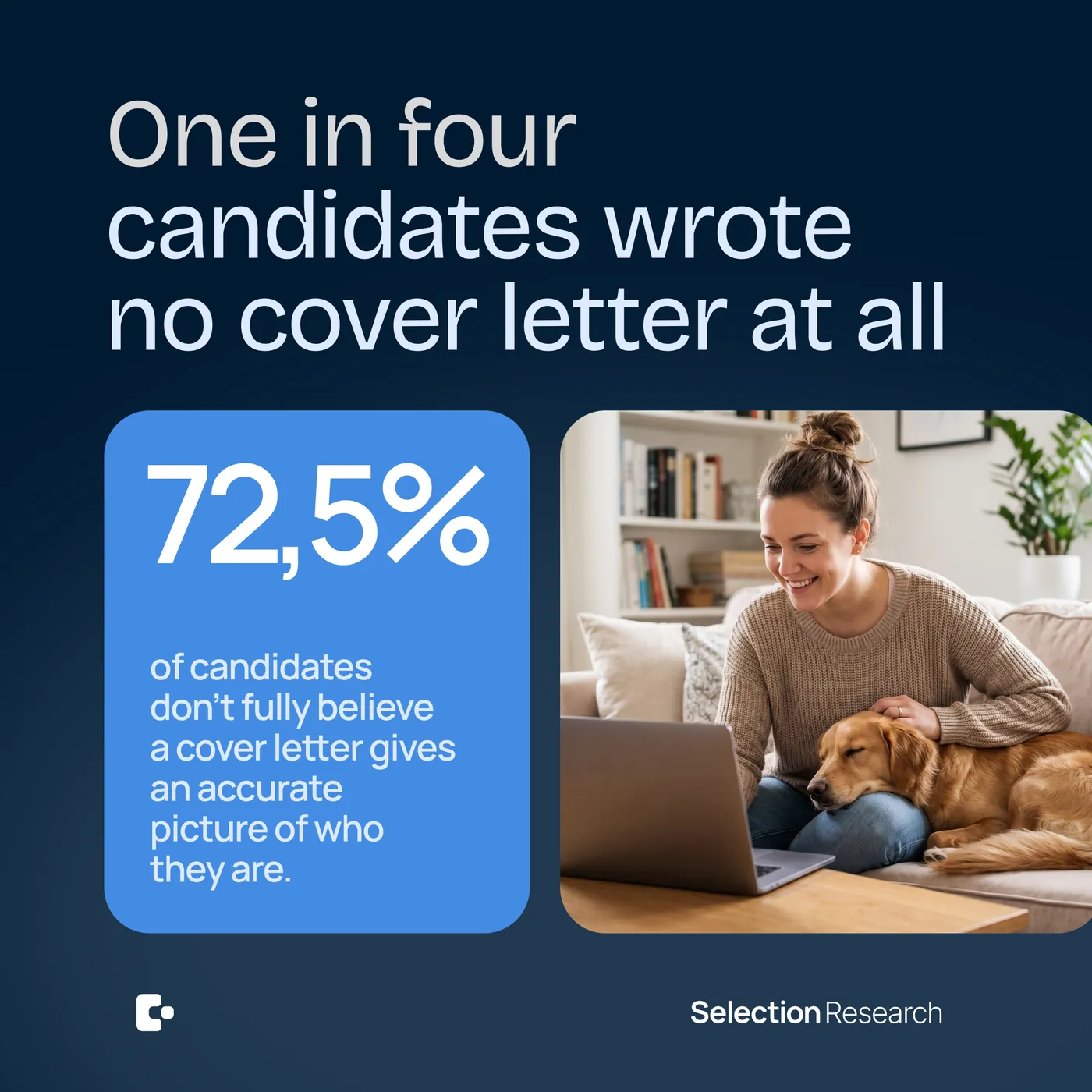
72.5% of candidates don't fully believe a cover letter gives an honest picture of their suitability.
26% wrote no cover letter at all for this application.
The debate candidates have already settled
While recruiters and HR professionals keep debating it, candidates quietly settled the matter long ago. In June 2026 we asked 805 applicants who completed an assessment as part of their application process. Two questions. Does a cover letter give an honest picture of your suitability? And did you use AI to write it?
Whoever doesn't believe in it doesn't write one either
The most convincing evidence isn't in what candidates say, it's in what they do.
Of candidates who say a cover letter doesn't give an accurate picture, 41% wrote none at all. Of candidates who say the letter is accurate, only 15% skipped it.
In other words, belief and behaviour move together. Candidates who don't believe in the value of the letter increasingly just leave it out. The cover letter isn't dying because experts declared it dead. It's dying because candidates are dropping it one by one.
Do you recognise that doubt yourself, wondering whether the letter still adds anything? Then there's a good chance you already take it less seriously than your resume, and that's exactly why you're weighing whether it still belongs in the mix.
Not a Gen Z story
You might expect younger candidates to be the ones skipping the letter. The data shows the opposite.
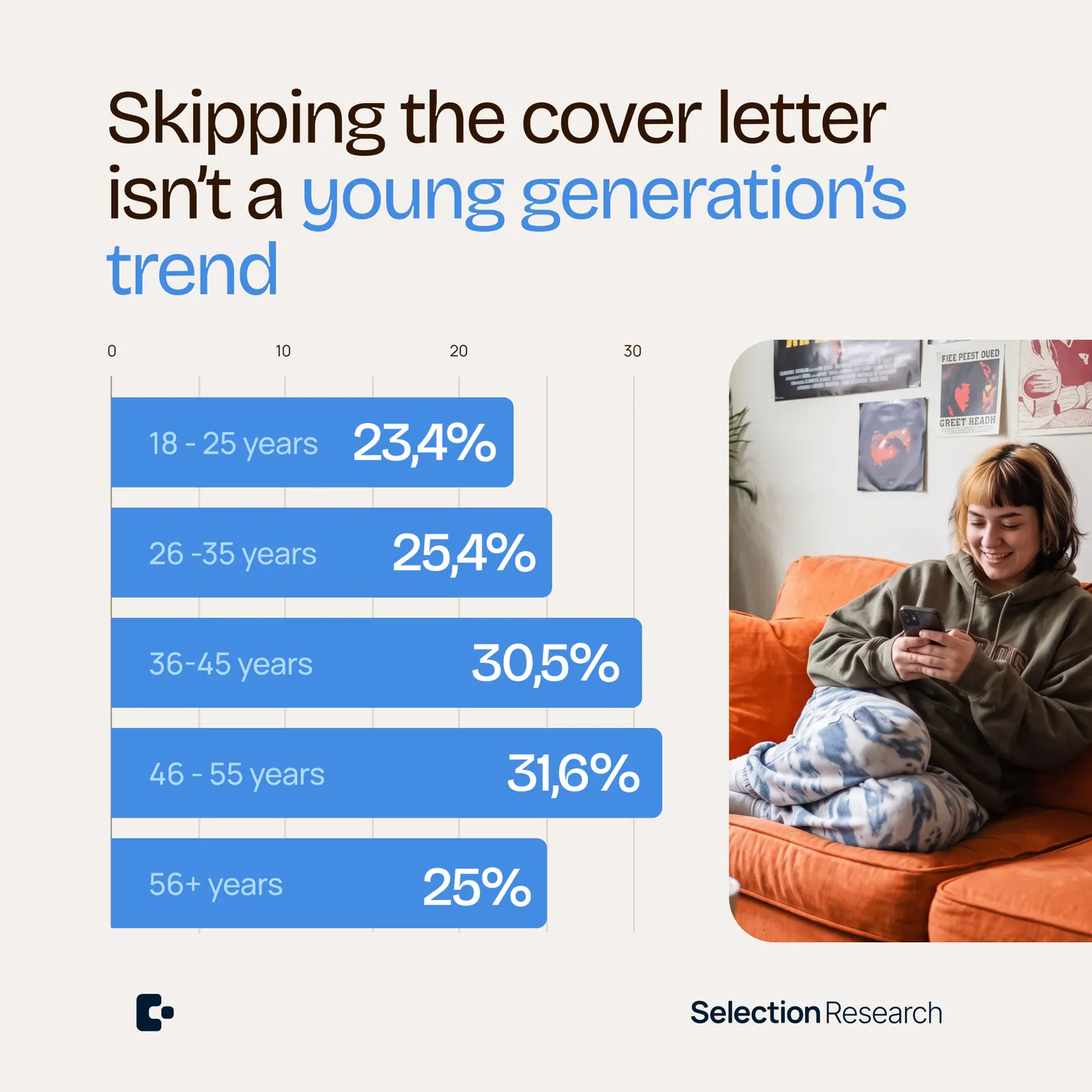
Among 18-25 year olds, 23% left out the letter. Among 36-45 year olds that was 31%, and among 46-55 year olds 32%. Older candidates drop the cover letter more often than younger ones.
AI use doesn't follow a simple generational story either. Candidates aged 56 and older were more likely to say AI wrote most of their letter (7.5%) than 18-25 year olds (2.5%).
Scepticism about the cover letter, and the ease with which people reach for AI, isn't a young person's habit. It runs across every age group.
One in four no longer writes one
26% of candidates wrote no cover letter at all for this application. Whether the employer didn't ask for one, or the candidate chose to leave it out, we can't say based on this data. What we do know is that a quarter of applicants went through the process without a letter.
AI does what candidates always did, just faster
25.5% of candidates used AI to write or improve their letter. Only 3.5% let AI write most of it; 22% used AI to improve their own text.
Using AI for the letter is, in essence, doing what candidates always did. Telling an employer what they want to hear. Just faster and smoother.
What this means for you as a recruiter
Candidates are either optimising their letters with AI, or not writing them at all. That makes it increasingly hard to judge who someone really is based on a letter.
The cover letter never measured motivation. It measured writing ability, and the willingness to sell yourself on paper. Now that AI removes that barrier, a polished letter says even less than it already did. And candidates know this better than anyone, the less they believe in the letter, the more often they simply drop it.
Organisations that take a different approach select faster, fairer and more objectively. Not based on how well someone writes a letter, but on who someone is and what they can do.
If you are deciding whether to still require a cover letter, we set out the three cases where it holds up and what to put in its place.
We'll keep following these developments for you through Selection Research.