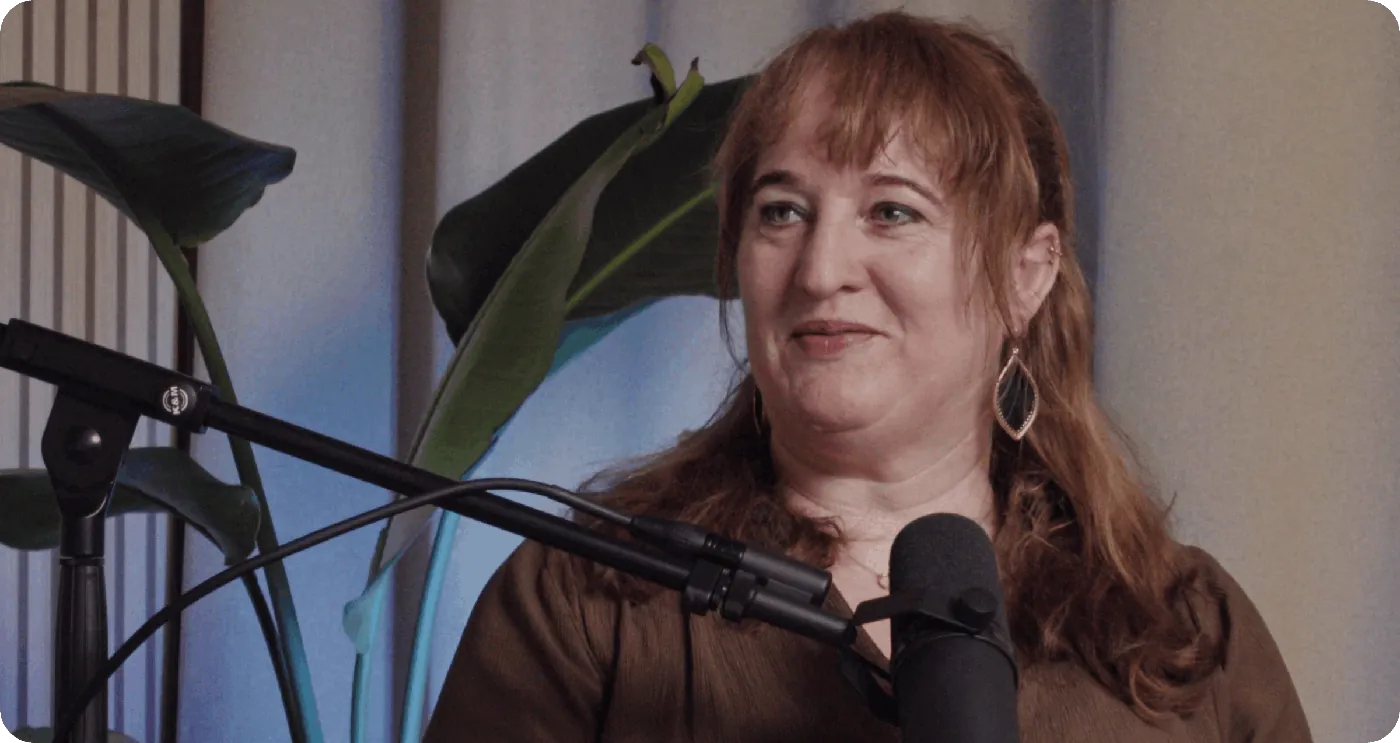
An employer becomes attractive, according to Nicol Tadema, by genuinely putting people first rather than treating engagement as a KPI. Trust, empathy and execution are the three core values she found, and the difference is usually made by very small things.
Nicol Tadema is a speaker, trainer and the author of six books on recruitment, copywriting and influence. She started as an agency recruiter at Tempo-Team, went on to build a copywriting agency of twelve people that she sold at the end of 2021, and then specialised in neurocopywriting and behaviour. In this episode of Selection Talks she talks about Het geheim van de meest aantrekkelijke werkgevers, the book she wrote with Arjan Elbers based on interviews with seven employers and eleven employer brand specialists, and about what gives those employers a waiting list.
Q: What does Nicol Tadema say about her new book Het geheim van de meest aantrekkelijke werkgevers?
A: Nicol Tadema says that this is her sixth book and the first she wrote with someone else, in this case Arjan Elbers. It is about how to become an employer with a waiting list. Arjan brings the recruitment strategy, she brings behaviour and psychology. Of the five thousand copies, more than four thousand had already been sold at the time of recording. The book comes out on 19 August.
Q: What does Nicol Tadema say about her path from agency recruiter to entrepreneur?
A: Nicol Tadema says she became an agency recruiter because she no longer knew what she wanted to be. She was a conference coordinator at Sdu Uitgevers, which moved to The Hague, and a friend referred her to Tempo-Team. That friend earned five hundred guilders for the referral. After three years she moved to a recruitment and selection agency, where she stayed nine years and ended up as marketing manager. On the side she started writing copy one day a week, and that hobby grew into an agency of twelve people that she sold at the end of 2021.
Q: What does Nicol Tadema say about writing a book together with Arjan Elbers?
A: Nicol Tadema says it was a party, even though writing together can be a real challenge. They know each other from her copywriting agency days, when he was at Get Noticed, and they previously set up a Google for Jobs event together. Arjan proposed the book in February. They gave each other room and assigned each section to whoever it belonged to. The content was ready in May, followed by rewriting, spelling, design and the printer.
Q: What does Nicol Tadema say about how the seven employers were chosen?
A: Nicol Tadema says that not every employer literally has a waiting list, but each has a story that creates real pull. At Verspeek Installaties, alongside thirty employees, some thirty to thirty-eight engineers are on the waiting list. Team Rockstars IT has a culture of its own, Numbers has a four-day week and no management layer. Toverland says it has no waiting list but is on many people's wish list. Rabobank, NS and Kesbeke Fijne Tafelzuren also feature.
Q: What does Nicol Tadema say about the storm heading for the labour market?
A: Nicol Tadema says the shortages are stacking up. Healthcare needs around 750,000 more people in the near future, construction 60,000 to build all the planned homes and the energy transition 30,000. Defence is hiring too. On top of that comes an ageing population, because fewer young people enter the market than there are people retiring. That is why she insisted on including a healthcare employer in the book, which after a long search became Stichting ORO.
Q: What does Nicol Tadema say about absenteeism and employee happiness?
A: Nicol Tadema says national absenteeism stood at 5.8 percent in the most recent CBS figures, against roughly 4 percent five years earlier. At Verspeek Installaties it was around 2.5 percent. A large share of absenteeism comes down to mental health complaints that broadly relate to workload, she says, while noting she is not fully at home in the subject. Where people genuinely come first, they are more engaged and call in sick less quickly.
Q: What does Nicol Tadema say about the boot warmer at Verspeek Installaties?
A: Nicol Tadema says this is her favourite small example from the book. Martijn Verspeek took inspiration from the changing rooms of successful football teams and installed a boot warmer in his. Anyone who has worked outside in the rain all day hangs up their soaking work boots and puts them back on the next morning dry and warm. His father asked what all that must cost. To him it is worth everything, because it makes his day.
Q: What does Nicol Tadema say about the role of selection in being a good employer?
A: Nicol Tadema says culture is the recurring theme and that good selection is what makes it possible. At Numbers, which has no management layer, the question Marieke Pepers gets most often is how you know whether people are doing what they should. Her answer starts with selection, on people who take responsibility and who fit this way of working. Building a culture takes a long time and one bad apple can undo it fast. That makes it less about skills and more about who someone is.
Q: What does Nicol Tadema say about the core values of the most attractive employers?
A: Nicol Tadema says three values came out of the interviews. Trust, meaning you radiate it as an employer and people also have it in you. Empathy, because if you put the employee first you have to understand how the other person feels. And execution, because you can talk through meeting after meeting without ever following through. All three, she says, have to be fed by the board and management, or recruitment will never get there.
Q: What does Nicol Tadema say about HR and recruitment in the boardroom?
A: Nicol Tadema says recruitment and HR are not a support function but the core of the organisation, because these are the people who make your organisation. If the board and management do not grasp that, she says, it will never work. She names Janine Vos of Rabobank as one of the few people from HR with a seat on the board, which she claimed herself. At companies of around thirty people the question matters less, because there the director is also HR.
Q: What does Nicol Tadema say about offboarding?
A: Nicol Tadema says offboarding is badly underrated and that at best companies dash to a petrol station for a five euro bunch of flowers. She describes an insurer where leavers handed in their pass at reception and were then escorted out by security, past colleagues who did not know it was their last day. Several people reported back that they felt like a criminal. Since then a colleague or the manager walks along to open the gate.
Q: What does Nicol Tadema say about the role of AI in being a good employer?
A: Nicol Tadema says AI barely appears in the book, not because it was deliberately left out but because it never came up and does not fit the subject. AI can make work easier, faster and more efficient, she says, including in labour-intensive roles. But healthcare is about attention for the client, and singing a song or taking a walk outside is not a task for a model.
Q: What does Nicol Tadema say about her own ambition?
A: Nicol Tadema says she wants to be on stage full time. For now she combines it with training assignments she enjoys a great deal, but the best moment is walking out of a room knowing she has planted a seed and that people look at things differently. Whether it is fifty people or five hundred does not matter to her. At the Spant! in Bussum she stood on the same stage where she watched Robert Cialdini speak ten years earlier.