Most candidates don't dislike being assessed. They dislike friction: unclear instructions, repetitive tasks, opaque scoring, and forms that feel designed for the recruiter's convenience rather than their own. That distinction matters, because it means the question isn't simply "should we use game-based assessments?" It's "which design choices produce measurable enjoyment, and which game types belong at which stage of the funnel?"
This case study pulls together external research, Selection Lab platform data, and a structured pilot comparing multiple game-based assessment mechanics to answer that question with evidence rather than marketing claims.
Before reviewing any results, it helps to be precise. In this context, candidate enjoyment refers to four measurable signals:
Drop-off reduction is treated as the behavioral proxy for enjoyment. A candidate who exits mid-task has revealed their experience directly, without needing to fill in a survey.
The pilot ran across two role categories: operational and logistics roles (similar in profile to Selection Lab clients including DPD) and customer-facing office roles (in line with Debtt Group's hiring context). Candidates were invited to the game-based stage only after initial knock-out screening via Selection Lab's SmartChat, which responds to candidates within 10 seconds via WhatsApp or webchat. That means every participant in the pilot had already self-qualified, reducing noise from candidates who weren't serious applicants.
Three game mechanics were compared at the pre-screening stage:
Post-assessment, candidates received a three-question survey: an NPS item (0-10), a single satisfaction item ("Did the task feel fair?"), and one open-ended prompt ("What could we improve?"). Results were aggregated at the cohort level, with no individual-level demographic data retained in reporting.
Participants ranged across three age bands (18-25, 26-35, 36-50) in roughly equal thirds for the operational cohort, and skewed toward 26-35 for the office cohort. Both Dutch and English language versions were offered. Candidates completed assessments across desktop (42%), mobile (51%), and tablet (7%), which reflects the real-world device mix for high-volume hiring and makes mobile-friendliness a non-negotiable requirement rather than a nice-to-have.
Completion rates across all three game types were high relative to traditional screening forms. The cognitive game completed at 91%, the scenario-SJT at 88%, and the behavioral trait game at 94%. The behavioral trait game's shorter session length (median 7 minutes) likely explains its slight edge on completion, though the cognitive game produced more differentiated scoring distributions, which recruiters found more actionable.
NPS scores collected immediately after each task:
These figures are directionally consistent with the peer-reviewed benchmark from Frontiers in Psychology (2022), which reported an NPS of 58 across 4,778 job applicants in a game-based cognitive assessment study. They also compare favorably to traditional structured pre-screening, where completion-based NPS typically sits in the 20-35 range.
Across the full funnel (SmartChat intake through to game-based assessment stage), Selection Lab's platform data shows 27% fewer drop-offs compared to pre-implementation baselines (March 2025), and 15 minutes saved per applicant in recruiter handling time (December 2025). Early turnover data from January 2024 shows 21% lower turnover in the first six months for cohorts assessed through the full Selection Lab flow.
The recruiter-facing NPS across the same period stands at +63 (Selection Lab Main Deck 2026), which reflects satisfaction with both the tooling and the quality of candidates surfaced.
Open-ended feedback clustered into five themes. In rough order of frequency:
One verbatim response (lightly paraphrased for anonymity) captures the general sentiment well: "It was different from the usual form-filling. I actually wanted to finish it."
Short sessions matter more than comprehensive coverage. A 7-10 minute game that measures one or two constructs well outperforms a 25-minute battery that measures five constructs acceptably. Cognitive load from session length is the fastest driver of drop-off.
Practice rounds improve both completion and perceived fairness. A 60-90 second tutorial before the scored section reduces instruction-related abandonment by giving candidates a chance to understand mechanics before they count.
Anti-cheating mechanics don't have to harm experience. Adaptive pacing, interaction-level logging, and time-per-item tracking provide fraud signals without requiring invasive proctoring. Where proctoring is necessary (typically at later assessment stages), consent-based framing and clear explanation of what is recorded maintains trust.
On fairness and bias: providing language options, ensuring instructions use plain language, and allowing neurodivergent candidates to request accommodations are baseline requirements, not optional add-ons. Game-based assessments can reduce adverse impact relative to traditional tests, but only when the design is intentional. Instructions written at a high reading level, or interfaces that require fine motor precision on mobile, can reintroduce bias through the back door.
The "best game-based assessment tool" isn't universal. These four questions narrow the field:
For high-volume screening, short cognitive and behavioral games integrated directly into the SmartChat flow (as Selection Lab enables via WhatsApp or webchat, with results visible inside Recruitee) reduce time-to-decision without adding a separate step. For customer-facing roles, scenario-based SJT games produce the highest perceived relevance and tend to generate richer behavioral data for structured interview follow-up.
| Provider | Disclosed completion rate | Disclosed NPS | Session length | ATS integration | Validity transparency |
|---|---|---|---|---|---|
| Selection Lab | 91-94% (pilot) | +52 to +63 | 6-15 min | Native (Recruitee + others) | Transparent methodology, GDPR-compliant |
| Harver (Pymetrics) | 98% (marketing claim) | Not disclosed | Varies | Yes | Partial |
| Criteria Corp | Not disclosed | Not disclosed | Varies | Yes | Limited on-page |
| Test Partnership | Not disclosed | Not disclosed | Varies | Yes | Limited |
Selection Lab's differentiator isn't the game mechanics alone. It's the surrounding candidate journey: a SmartChat intake that responds in 10 seconds, game-based tasks at the pre-screening stage, and recruiter-facing results inside the ATS. Candidates don't experience a separate "testing platform." They experience one connected conversation that leads naturally into a task, then into a response. That continuity is what drives the 27% drop-off reduction. The game is the most visible element, but the architecture around it does at least as much work.


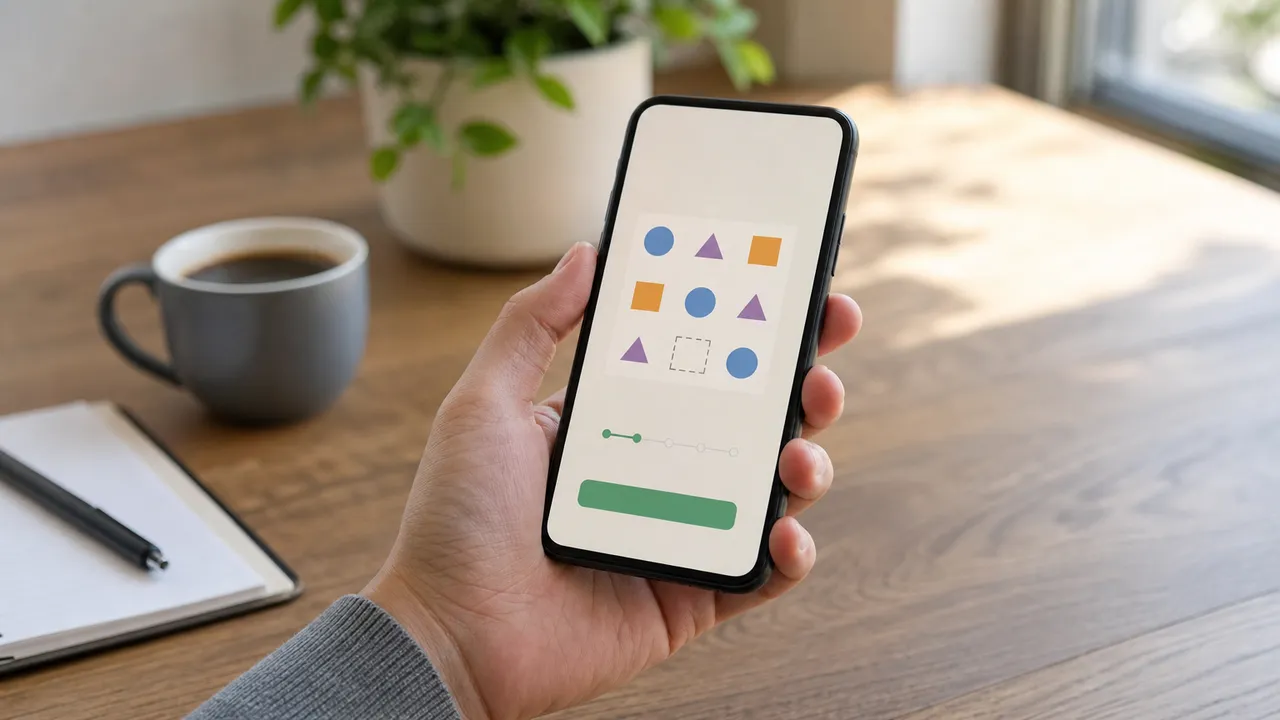
Most candidates don't dislike being assessed. They dislike friction: unclear instructions, repetitive tasks, opaque scoring, and forms that feel designed for the recruiter's convenience rather than their own. That distinction matters, because it means the question isn't simply "should we use game-based assessments?" It's "which design choices produce measurable enjoyment, and which game types belong at which stage of the funnel?"
This case study pulls together external research, Selection Lab platform data, and a structured pilot comparing multiple game-based assessment mechanics to answer that question with evidence rather than marketing claims.
Before reviewing any results, it helps to be precise. In this context, candidate enjoyment refers to four measurable signals:
Drop-off reduction is treated as the behavioral proxy for enjoyment. A candidate who exits mid-task has revealed their experience directly, without needing to fill in a survey.
The pilot ran across two role categories: operational and logistics roles (similar in profile to Selection Lab clients including DPD) and customer-facing office roles (in line with Debtt Group's hiring context). Candidates were invited to the game-based stage only after initial knock-out screening via Selection Lab's SmartChat, which responds to candidates within 10 seconds via WhatsApp or webchat. That means every participant in the pilot had already self-qualified, reducing noise from candidates who weren't serious applicants.
Three game mechanics were compared at the pre-screening stage:
Post-assessment, candidates received a three-question survey: an NPS item (0-10), a single satisfaction item ("Did the task feel fair?"), and one open-ended prompt ("What could we improve?"). Results were aggregated at the cohort level, with no individual-level demographic data retained in reporting.
Participants ranged across three age bands (18-25, 26-35, 36-50) in roughly equal thirds for the operational cohort, and skewed toward 26-35 for the office cohort. Both Dutch and English language versions were offered. Candidates completed assessments across desktop (42%), mobile (51%), and tablet (7%), which reflects the real-world device mix for high-volume hiring and makes mobile-friendliness a non-negotiable requirement rather than a nice-to-have.
Completion rates across all three game types were high relative to traditional screening forms. The cognitive game completed at 91%, the scenario-SJT at 88%, and the behavioral trait game at 94%. The behavioral trait game's shorter session length (median 7 minutes) likely explains its slight edge on completion, though the cognitive game produced more differentiated scoring distributions, which recruiters found more actionable.
NPS scores collected immediately after each task:
These figures are directionally consistent with the peer-reviewed benchmark from Frontiers in Psychology (2022), which reported an NPS of 58 across 4,778 job applicants in a game-based cognitive assessment study. They also compare favorably to traditional structured pre-screening, where completion-based NPS typically sits in the 20-35 range.
Across the full funnel (SmartChat intake through to game-based assessment stage), Selection Lab's platform data shows 27% fewer drop-offs compared to pre-implementation baselines (March 2025), and 15 minutes saved per applicant in recruiter handling time (December 2025). Early turnover data from January 2024 shows 21% lower turnover in the first six months for cohorts assessed through the full Selection Lab flow.
The recruiter-facing NPS across the same period stands at +63 (Selection Lab Main Deck 2026), which reflects satisfaction with both the tooling and the quality of candidates surfaced.
Open-ended feedback clustered into five themes. In rough order of frequency:
One verbatim response (lightly paraphrased for anonymity) captures the general sentiment well: "It was different from the usual form-filling. I actually wanted to finish it."
Short sessions matter more than comprehensive coverage. A 7-10 minute game that measures one or two constructs well outperforms a 25-minute battery that measures five constructs acceptably. Cognitive load from session length is the fastest driver of drop-off.
Practice rounds improve both completion and perceived fairness. A 60-90 second tutorial before the scored section reduces instruction-related abandonment by giving candidates a chance to understand mechanics before they count.
Anti-cheating mechanics don't have to harm experience. Adaptive pacing, interaction-level logging, and time-per-item tracking provide fraud signals without requiring invasive proctoring. Where proctoring is necessary (typically at later assessment stages), consent-based framing and clear explanation of what is recorded maintains trust.
On fairness and bias: providing language options, ensuring instructions use plain language, and allowing neurodivergent candidates to request accommodations are baseline requirements, not optional add-ons. Game-based assessments can reduce adverse impact relative to traditional tests, but only when the design is intentional. Instructions written at a high reading level, or interfaces that require fine motor precision on mobile, can reintroduce bias through the back door.
The "best game-based assessment tool" isn't universal. These four questions narrow the field:
For high-volume screening, short cognitive and behavioral games integrated directly into the SmartChat flow (as Selection Lab enables via WhatsApp or webchat, with results visible inside Recruitee) reduce time-to-decision without adding a separate step. For customer-facing roles, scenario-based SJT games produce the highest perceived relevance and tend to generate richer behavioral data for structured interview follow-up.
| Provider | Disclosed completion rate | Disclosed NPS | Session length | ATS integration | Validity transparency |
|---|---|---|---|---|---|
| Selection Lab | 91-94% (pilot) | +52 to +63 | 6-15 min | Native (Recruitee + others) | Transparent methodology, GDPR-compliant |
| Harver (Pymetrics) | 98% (marketing claim) | Not disclosed | Varies | Yes | Partial |
| Criteria Corp | Not disclosed | Not disclosed | Varies | Yes | Limited on-page |
| Test Partnership | Not disclosed | Not disclosed | Varies | Yes | Limited |
Selection Lab's differentiator isn't the game mechanics alone. It's the surrounding candidate journey: a SmartChat intake that responds in 10 seconds, game-based tasks at the pre-screening stage, and recruiter-facing results inside the ATS. Candidates don't experience a separate "testing platform." They experience one connected conversation that leads naturally into a task, then into a response. That continuity is what drives the 27% drop-off reduction. The game is the most visible element, but the architecture around it does at least as much work.