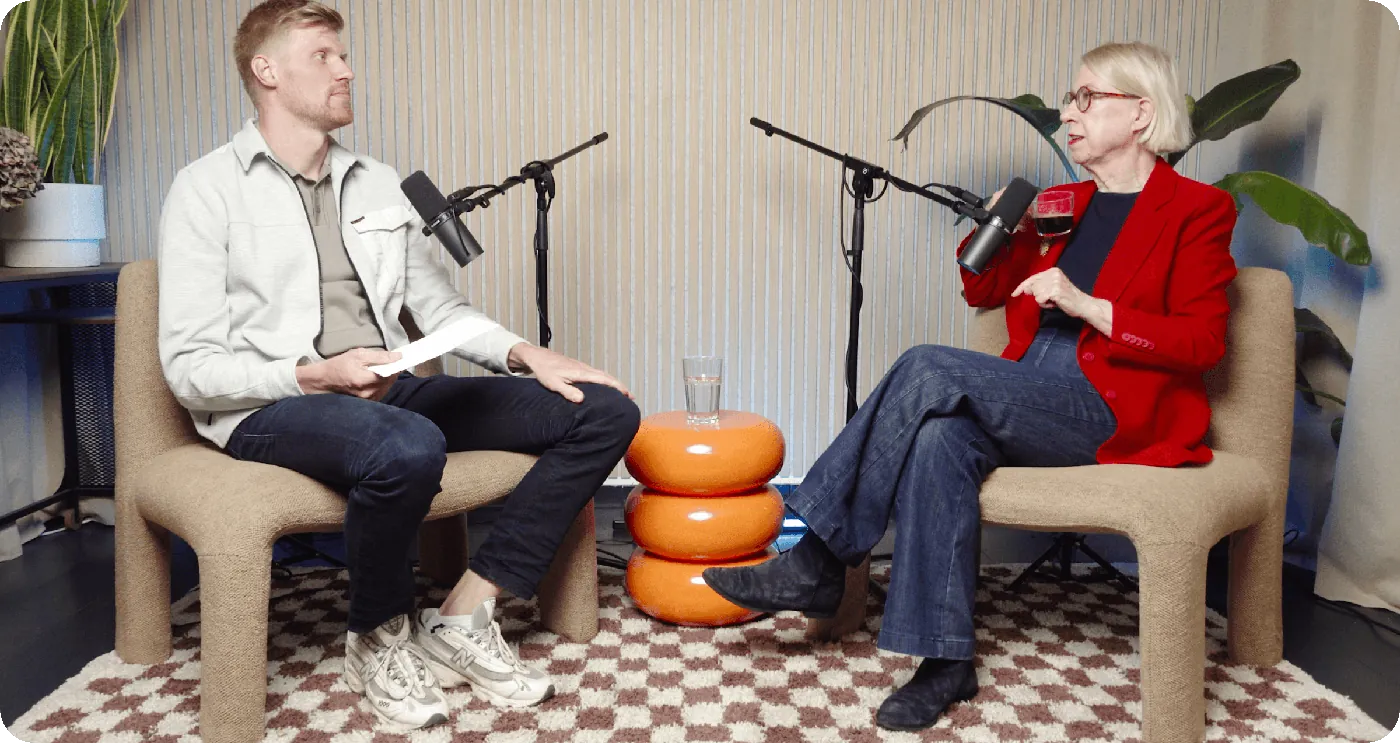
Aaltje Vincent is one of the best-known job application experts in the Netherlands, a speaker and the bestselling author behind the Jobmarketing method. She has run her own practice as a career professional since 2007, and her book Jobmarketing is now in its 35th print run, which together with her other titles adds up to more than 100,000 copies sold. With around 60,000 followers on LinkedIn, she is also one of the faces of the field online. Since 2017 she has focused not only on job seekers but explicitly on employers and the way they treat candidates, a line of work that led in 2026 to her book Bruut eerlijk werven on honest recruitment and selection.
Q: How did job application expert Aaltje Vincent end up in the field herself?
A: Through three dismissals before she turned 28. Aaltje was let go by three corporates in a row because she did not thrive in a tightly defined role within a large organisation. After her third dismissal, at Van Nelle in Rotterdam, she asked for outplacement support herself, which was unusual at the time. That was where she discovered she wanted to work in a small environment where she could leave her own mark, and that is how she rolled into the field she has now worked in for decades.
Q: Why do candidates leave their strongest points off their CV according to Aaltje Vincent?
A: Because almost everyone has more to offer than they realise themselves. In her CV coaching, Aaltje keeps probing until someone feels uncomfortable and really has to think about what they have achieved. That is exactly when the gems surface that were not on the CV, even though those are often the most compelling elements. This applies to recent graduates just as much as to seasoned professionals, and Aaltje sees it slightly more strongly among women than men on average.
Q: According to job application expert Aaltje Vincent, what is the best way to land a job?
A: Referral, meaning getting in through someone who already works there. Aaltje distinguishes three routes to the interview table. The first is referral through your network, the second is being sourced on LinkedIn, and the third is the post-and-pray method where an employer posts a vacancy and hopes for good candidates. Referral is the most preferred route for the candidate and at the same time delivers the best new colleagues to the employer, because a pre-selection on craftsmanship and culture has already taken place before anyone even applies.
Q: How many people find their job through their network according to Aaltje Vincent?
A: More than most employers measure. Aaltje points to research showing that roughly 30% of all vacancies never even go online and are therefore filled through personal connections anyway. Referral experts already call filling 30 to 40% of roles through referral a top score. Yet at large corporates she interviewed during onboarding days, sometimes three quarters of new colleagues raised a hand when asked who already knew someone working there, even though they had not officially come in through that route.
Q: Does the number of years of work experience on your CV predict how well someone will perform according to Aaltje Vincent?
A: No, experience measured in years says little about talent or aptitude. For the chapter on selection methods in her book Bruut eerlijk werven, Aaltje drew on scientific research showing that the number of years of experience on a CV has no predictive value for someone's eventual job performance. Someone who worked somewhere for three years can perform worse than someone who did the same work for six months. Performance also depends heavily on the environment and the people you work with, something a CV never reveals.
Q: How can an employer select better than with a CV according to Aaltje Vincent?
A: By shifting the emphasis to assessments and self-selection. Aaltje refers to the scientific grounding in her book and argues that assessments or cognitive ability tests, possibly combined, lead to better selection decisions than ever at the moment you decide who to invite. Just as important is the moment before that, when a candidate still has to decide whether to apply at all. There an honest vacancy text, a good video and above all letting people who currently do the work talk about it all help, exactly as in a podcast.
Q: Is AI killing the cover letter according to Aaltje Vincent?
A: If she has anything to say about it, yes, and she welcomes it. Aaltje expects AI to make the cover letter redundant and believes the sooner that happens the better, because in her view the letter predicts very little. She does point out that even an AI-refined CV fails to reveal a candidate's unconscious competencies. You only surface those by asking good questions or by measuring with assessments, and that is precisely where the real value in selection lies.
Q: How many candidates use AI according to Aaltje Vincent?
A: According to research from Intelligence Group that Aaltje cites, 11.7%, a figure that she and the career coaches she trains find surprisingly low. She expects it to rise quickly now that AI is going mainstream, something she now sees reflected even in consumer magazines. More important than the number, she believes, is that people become AI literate, something the EU AI Act also calls for. Her advice is to give AI a role and context and to state the result you want, rather than bluntly firing off a question.
Q: Which AI tools does Aaltje Vincent use herself?
A: Mainly ChatGPT, Claude and Perplexity. Aaltje uses ChatGPT chiefly to brainstorm, Claude for language, text and structure, and she relied heavily on Perplexity for the research behind her latest book. She has by now trained hundreds of career coaches to apply AI in their coaching and keeps herself up to date through monthly online peer sessions. Her main tip is to give AI a clear instruction, role and desired result, and to always make the output your own afterwards.
Q: How do you approach a candidate well on LinkedIn according to Aaltje Vincent?
A: By showing that you have genuinely noticed the person. Aaltje sees many recruiters firing the same message at everyone and then complaining that people respond curtly. Her point is that someone who does not receive a personal message does not feel seen, while being seen and belonging is exactly what people want. A good sourcer names what might resonate with someone and what you have in common, and that is a craft in its own right.
Q: What tips does Aaltje Vincent give for a job interview over video?
A: Make sure you have daylight on your face, a stable connection and clear facial expression. Aaltje advises not to sit with your back to the window but to let the daylight fall on your face instead, and not to use a weak wifi connection that the whole house runs on. Because there is a screen between you and the person you are talking to, you have to emphasise your facial expression a little more than in a conversation in person.
Q: What is Aaltje Vincent's biggest lesson as an entrepreneur?
A: Daring to say no and staying close to yourself. Over the years Aaltje received many offers that looked lucrative on paper, from training a large team of coaches to paid posts on LinkedIn, but she turned them down because she wanted to stay independent and above all keep working on her craft. She says she reads around two hours a day to stay current and thrives best in a small environment without a tightly defined role. Her driving force stayed the same throughout, namely helping people apply smartly and pursue their hope of a better life.
.png)