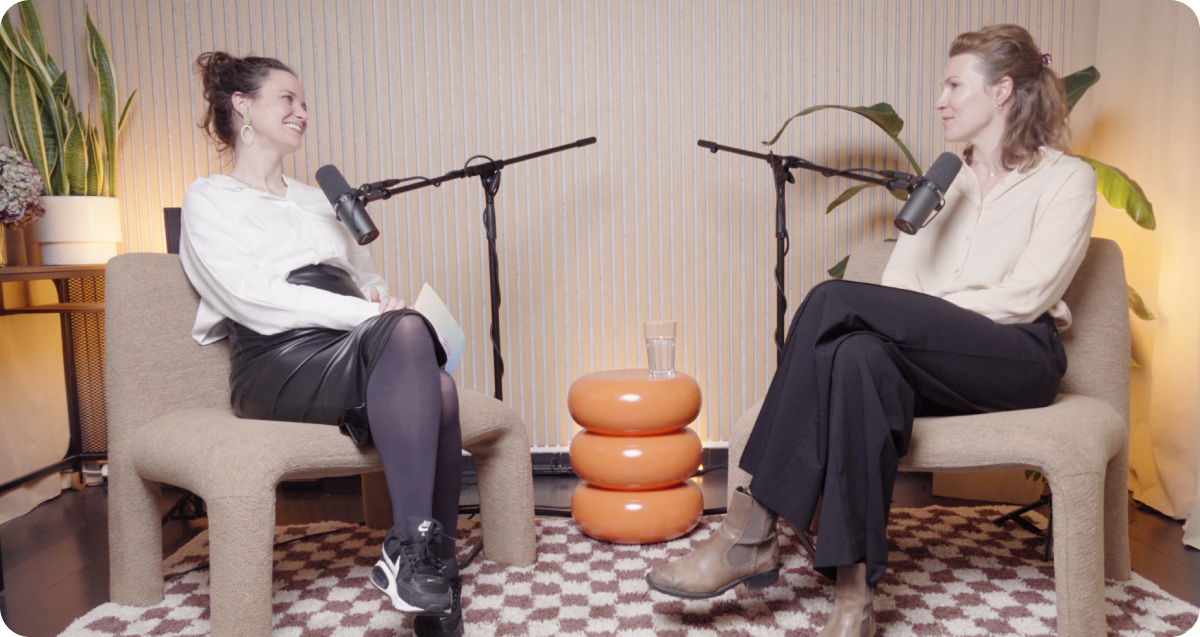
Emma Visser is manager Recruitment and Labour Communication at Securitas, one of the largest security organisations in the Netherlands with nationwide coverage. She joined Securitas nine years ago as a recruiter, progressed to team leader and has been responsible for the recruitment team for two years. Before Securitas she worked in the staffing industry. Securitas operates across a wide range of segments: from security at Schiphol and the Port of Rotterdam to object security at educational institutions and mobile surveillance.
Q: Why did Emma Visser from Securitas deliberately choose corporate recruitment after working in the staffing industry?
A: Because in the staffing industry she too often could not place the right candidates with clients. Emma missed the depth that comes from working for one company and truly getting to know the client and their needs. At Securitas she could make that connection. She had not expected it to be in security and had no intention of staying nine years. But the diversity of the industry drew her in.
Q: How does campus recruitment differ from experienced hire recruitment according to Emma Visser from Securitas?
A: Campus recruitment is entirely about personal contact and networking at events, while experienced hire recruitment is more about sourcing. In campus recruitment, students do not so much choose the company as the recruiter. That recruiter is, in the student's eyes, the face of the organisation. A high social battery is essential for this. With experienced hire recruitment at manager and director level the approach is fundamentally different and requires more targeted searching.
Q: How do recruiters at Securitas handle hiring managers who are critical about candidates?
A: By actively engaging in the critical conversation and pointing hiring managers towards the potential of a candidate. Emma explains that the labour market is tight and that a candidate who scores a six today can become an eight or nine with good leadership. When recruiters know the industry, know which clients have open positions and understand which competencies are needed, they can give solid advice to the hiring manager upfront and bring them along in that reasoning.
Q: What was the biggest recruitment challenge for Emma Visser from Securitas in the past year?
A: Hiring a large number of new security officers for Schiphol within six weeks after winning a tender. Emma describes it as a major team achievement: calling evenings together as a team, selection days at the weekend. Securitas recently won back the tender for the security lanes at Schiphol, something the company had not held for the previous five years. That tender brought an immediate hiring need that the team had to fill in a very short time.
Q: How does Emma Visser from Securitas use AI to support the recruitment process?
A: Securitas works with Copilot to summarise labour market research and reports. Emma gives the example of a fifty-page report that Copilot condenses into the key points and immediately provides insight into what to focus on. Her recruiters also use AI for job descriptions and spell checking. Her team actively thinks about process optimisations and comes up with their own ideas about where AI can be deployed.
Q: How does AI help Securitas reach more candidates according to Emma Visser?
A: By automating the first point of contact through a chatbot that is available 24/7. Emma sees that Securitas loses 25 to 30 percent of candidates because they are unreachable by phone or message. A chatbot that makes first contact keeps the funnel wider for longer. Her reasoning: if you reach even 10 percent more of those candidates, it has a direct effect on hiring success. Securitas says it is on the verge of automating its recruitment process.
Q: Why is the human aspect of recruitment not replaceable by technology according to Emma Visser from Securitas?
A: Because the right placement depends on observations you can only make in a real conversation. At Securitas it is crucial to see how someone sits, how they answer and whether they fit the specific client and context. Placing an extroverted person in mobile surveillance or an introverted person at Schiphol simply will not work. You cannot get that distinction from a chat conversation. That is why they call the follow-up meeting with the hiring manager a chemistry conversation.
Q: How does Emma Visser from Securitas see the future of the recruiter?
A: As a career coach who helps people discover where they want to go. Emma hopes that technology will take over administrative and repetitive tasks, freeing up recruiters for more in-depth conversations. In those conversations they can guide candidates through what Securitas does, which clients and roles exist and where someone's ambitions are best served. Her conviction: better matches upfront lead to employees who stay longer and feel genuinely connected to the organisation.