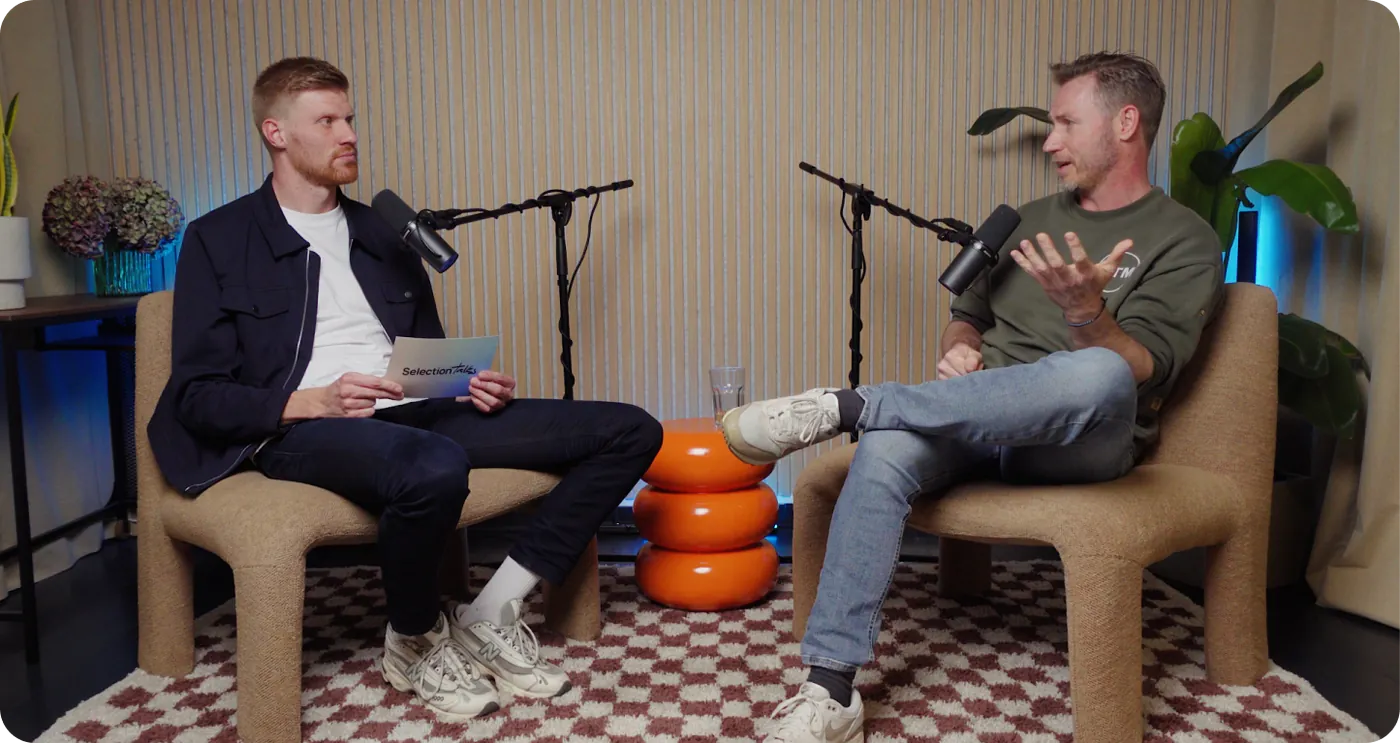
Patrick Boonstra is founder of Recruitment Tech Masters, an advisory firm that helps organisations with the selection and implementation of recruitment technology. He started his career as student director of Stud, the student employment agency of Delft University of Technology, and went on to build more than ten years of consultancy experience in the recruitment tech landscape. Together with partner Daan Huisman he now primarily helps larger, complex organisations set up their ATS landscape. Alongside his entrepreneurship, Patrick is a board member of Stud and co-organiser of True Amsterdam, the Recruitment Unconference that has now reached its twentieth edition.
Q: How did Patrick Boonstra from Recruitment Tech Masters learn the recruitment profession by running a student employment agency?
A: By being a fully empowered director of Stud, the student employment agency of Delft University of Technology, with complete decision-making authority. Patrick learned both sides of recruitment: winning an assignment and filling it. What he carries with him from that time: if the proposition is solid and you solve problems with common sense, there are plenty of companies willing to hire you. Stud still exists today, now with a turnover of 2 million euros and a team of seven.
Q: Why are staffing consultants undervalued in recruitment according to Patrick Boonstra from Recruitment Tech Masters?
A: Because a staffing consultant is essentially a 360 agency recruiter who masters both the commercial and the recruitment side. Patrick observes that staffing consultants are trained faster in asking the right questions and truly understanding what a client needs than most corporate recruiters, who are used to a post-and-pray approach. The best recruiters he knows all started in the staffing industry.
Q: How does Patrick Boonstra from Recruitment Tech Masters help organisations choose the right recruitment technology?
A: By going back to the problem first rather than the tool. Patrick calls this love the problem, not the solution. Many organisations come to him with an ATS question, while the ATS is not always the real problem. He always asks the same questions: what is your actual problem, what is the scope, is it high volume or niche hiring, national or international? Only once the problem is clear does he look at which technology fits.
Q: What are the pitfalls of using HRS systems as an ATS replacement according to Patrick Boonstra from Recruitment Tech Masters?
A: Configuration takes longer, costs more and delivers less than a dedicated ATS. Patrick explains this concretely: an HRS like Workday, AFAS or SuccessFactors is an excellent HR administration system, but not a recruitment tool. Configuration takes longer and is more expensive, integrations with career sites or selection tools cost five to ten times more than with a dedicated ATS, and you ultimately need more recruiters and more marketing budget to run the same engine.
Q: What is the most underestimated integration in an ATS implementation according to Patrick Boonstra from Recruitment Tech Masters?
A: Not the connection at the point of hire back to the HR system, but the synchronisation of master data from the HR system into the ATS. Patrick explains that locations, department structures, job families and contract types in the HR system are the source data you also need in your ATS. A company like Action opens new stores every day and has more than 300 location mutations per year. If those are not automatically synchronised, noise enters the recruitment process immediately.
Q: How does Patrick Boonstra from Recruitment Tech Masters view the impact of AI on recruitment tech?
A: We overestimate the impact in the short term and massively underestimate it in the long term. Patrick compares AI to electricity: it is a collective term for completely different applications that also solve completely different problems. AI for generating job descriptions is a different technology from AI matching or an AI companion. His advice: do not look at what AI is available in the market and try to bring that back to your problem, but start with your problem and then look at which technology fits.
Q: What makes True Amsterdam as a Recruitment Unconference different from other recruitment events according to Patrick Boonstra?
A: No PowerPoints, no pitches, no presentations and no name tags. True Amsterdam, now in its twentieth edition, is based on the concept of Bill Boorman: the best conversations happen at the bar with friends. The concept was brought to the Netherlands by Gordon Lokenberg and Patrick is now co-organiser. True Amsterdam takes the form of discussions, hackathons and workshops where participants have to defend their position based on statements he puts forward as dragon slayer. Two apparently opposing statements, after which participants take a position and debate each other.
Q: What is the role of Patrick Boonstra as a board member of Stud and what does the agency do with its profits?
A: As a board member Patrick provides continuity, network access and guidance where needed, while the students run the agency themselves and learn from doing it. The profits Stud makes go back to the students in the form of events, funding for startup ideas and potential scholarships. Patrick returned to the board 25 years after his own stint as student director, a full circle that for him symbolises giving something back to a new generation.